Event marketing is not ecommerce. Attribution is broken.
Why treating ticket sales like Shopify checkout funnels destroys top-of-funnel discovery and collapses ROI.

Key takeaways for event promoters
- Tickets are social, calendar commitments with multi-person decision chains, not impulsive single-user ecommerce purchases.
- Dark social (WhatsApp groups, iMessage, Instagram DMs) accounts for up to 68% of the discovery-to-purchase bridge in live events.
- Killing top-of-funnel video views or high-reach TikTok ads because GA4 shows zero last-click revenue invariably kills direct search and email revenue 10 days later.
- Promoters must transition to Blended Marketing Efficiency Ratio (MER) and first-click/post-view tracking to protect profitable scale.
Why standard ecommerce attribution models fail for live events
Most digital agencies come from the direct-to-consumer (DTC) ecommerce world. They set up standard UTM parameters, look at Google Analytics 4 last-click models, and evaluate every campaign on a 1:1 transaction match within a 7-day click window.
When you apply that logic to live music, festivals, and venue programming, your marketing decisions become dangerously distorted. Here is why:
- Social coordination friction: When someone sees an ad for a festival, they do not immediately click and buy four tickets. They screenshot the ad, open WhatsApp, send it to a group chat of six friends, discuss diaries, wait for pay day, and one person eventually buys on a desktop browser via direct search two weeks later.
- The Dark Social black hole: In standard analytics, that sale is attributed to "Direct / Organic Search". The top-of-funnel ad that triggered the entire conversation receives zero credit.
- Device hop: Over 82% of ad impressions occur on mobile, but over 45% of high-value ticket transactions (especially group orders and festival tiers over £150) complete on desktop.
If you optimize an event campaign purely on last-click attribution, you will eventually allocate 100% of your budget to branded Google Search and email remarketing, and wonder why total ticket volume drops by half.
The true anatomy of an event ticket purchase journey
Understanding how tickets actually sell requires mapping the hidden touchpoints that traditional web analytics fail to track:
| Stage | Real Attendee Action | Platform | GA4 Attribution |
|---|---|---|---|
| Touch 1 | Discovers lineup teaser video | TikTok / Meta Feed | Not tracked (View-through) |
| Touch 2 | Shares screenshot in 8-person group chat | WhatsApp / Dark Social | Zero tracking footprint |
| Touch 3 | Friends confirm attendance over 5 days | Offline / Messaging | Zero tracking footprint |
| Touch 4 | Organizer receives on-sale reminder email | Klaviyo / Brevo | Email (First trackable click) |
| Touch 5 | Buys 4 tickets on laptop at work via Google | Direct / Search | Organic Search (100% credit) |
How to manage event media using Blended MER and In-Platform ROAS
Instead of relying on fragmented platform attribution, top-tier event operators use Marketing Efficiency Ratio (MER) as their primary north star metric:
MER = Total Gross Ticket Revenue / Total Marketing Ad Spend
When managing multi-channel spend across Meta, Google, TikTok, and WhatsApp, track blended MER daily alongside in-platform 7-day click / 1-day view attribution. If Meta shows a 6.0x ROAS and blended MER remains above 10.0x, scaling top-of-funnel spend will grow gross revenue even if GA4 last-click shows low direct numbers.
Here are the target MER benchmarks we hold for healthy event categories:
- Sub-1,000 Cap Club Event: Target MER 12.0x to 18.0x (marketing spend should not exceed 6-8% of gross revenue).
- Medium Scale Venue (1,000 to 5,000 Cap): Target MER 9.0x to 14.0x.
- Multi-Day Festival (10,000+ Cap): Target MER 7.0x to 11.0x (due to longer consideration cycles and higher production spend).

Common questions answered.
GA4 defaults to last-click non-direct attribution, which ignores ad views and dark social sharing in messaging apps. Meta tracks 7-day click and 1-day view conversions, capturing users who saw or clicked your ad but converted later through direct search or email.
For most live events, allocate 65-70% of paid spend to top-of-funnel cold acquisition (lineup videos, artist reels, lookalikes) and 30-35% to bottom-of-funnel retargeting (website visitors, ticket drop reminders, WhatsApp/SMS).
Include clean UTM parameters on WhatsApp broadcast links and provide short, branded shareable links (e.g. yourbrand.com/drop) that group leaders can paste directly into group chats.
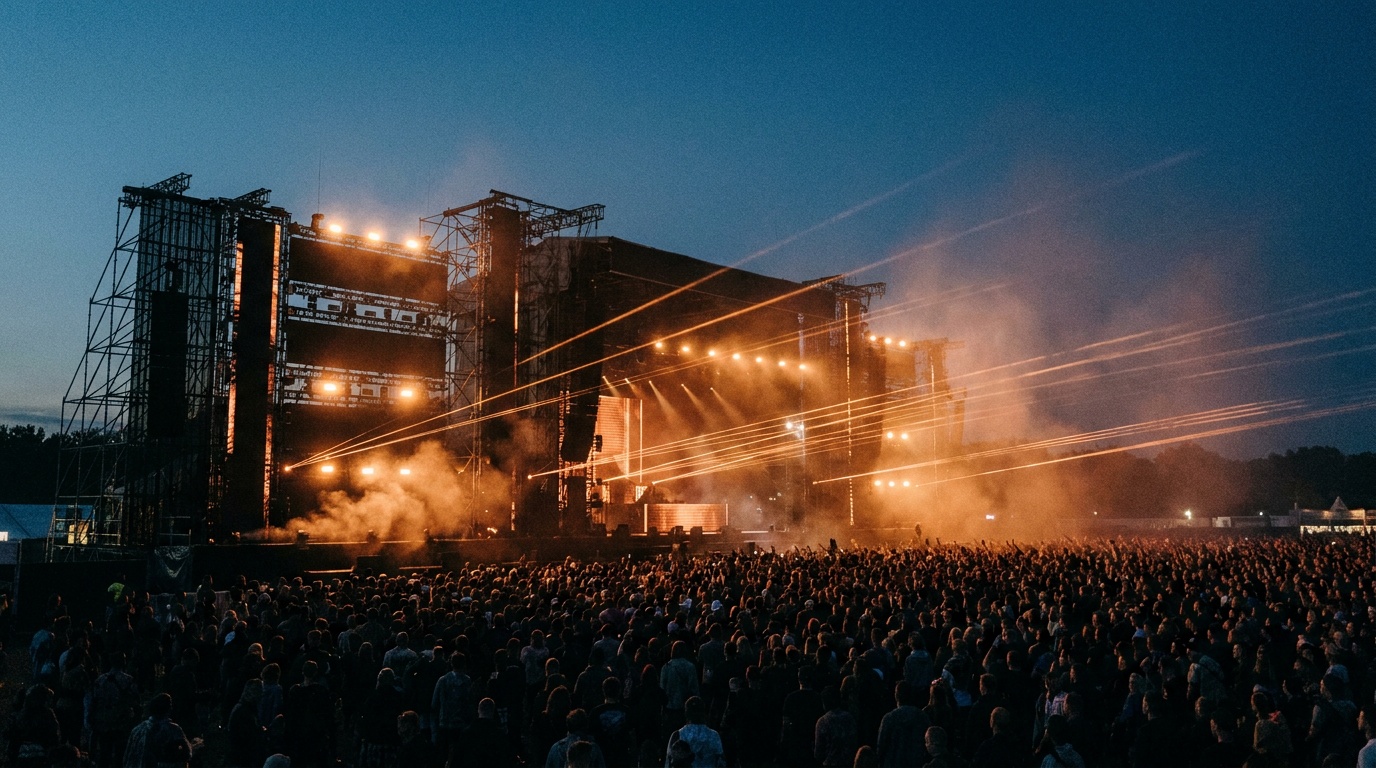
57% of Tickets Now Sell in the Final 7 Days: What That Means for Your 2026 Campaign
Consumer purchase windows for live events have compressed by 26% since 2022. Here is the operational framework to maintain launch velocity without starving your final 14-day conversion window.

Meta Conversions API (CAPI) and Server-Side GTM for Ticket Sellers: The Definitive Setup
Browser-only Facebook pixel tracking is dead. Third-party cookie deprecation and ad-blockers blind your ad accounts. Here is the technical blueprint to deploy server-side Google Tag Manager and Meta CAPI via Stape for ticketing.
WhatsApp community events: a promoter’s playbook
Build a useful WhatsApp audience for event announcements, early access and repeat attendance. Plan the community, launch sequence and measurement together.
Engineered to sell out.
Ready to upgrade your campaign pacing, WhatsApp infrastructure, and server-side tracking?